
Cameroon is an independent country of approximately 28.3 million people located on the west coast of Africa. Cameroon borders the Gulf of Guinea, Nigeria, Chad, the Central African Republic, the Republic of the Congo, Gabon, and Equatorial Guinea.
Cameroon Existence Timeline
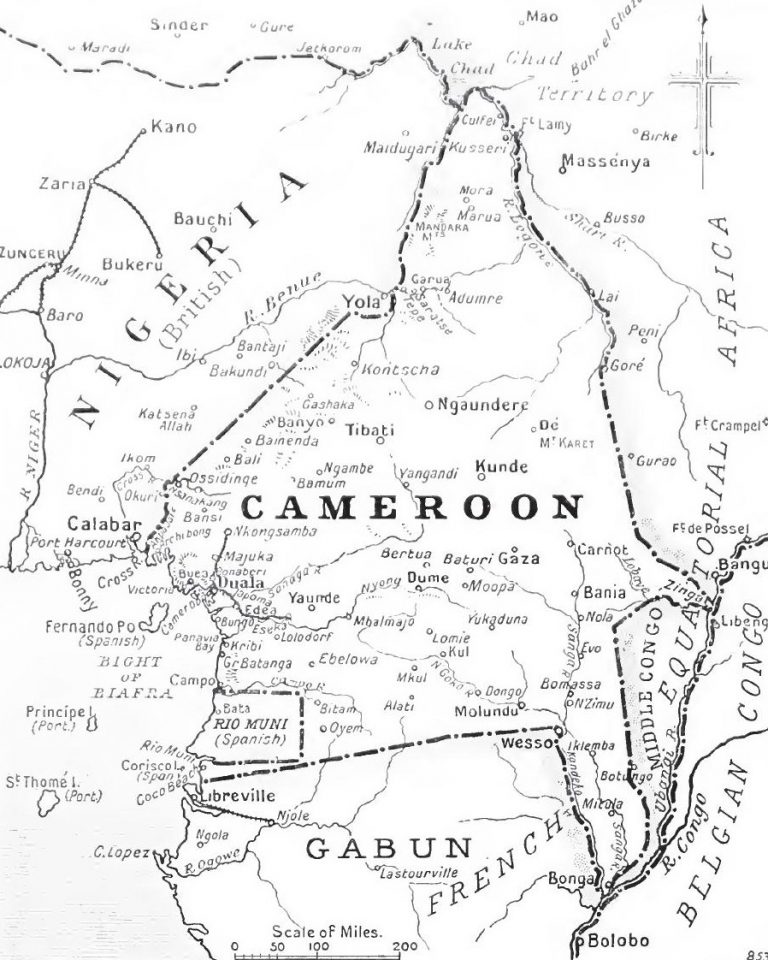
On July 5, Germany formed the colony “Kamerun.” Before it was colonized, European presence was concentrated on the coast for trade and kidnapping people for slavery.
During World War I, British forces invaded and occupied German Kamerun. After the war, on June 28, the League of Nations established the mandate system. For German colonies in Central Africa, the League of Nations forcibly placed these lands and populations under another country’s administration. German Kamerun was split into two territories—the northern region was…Read More
The Union of Cameroonian Peoples (UPC) rebelled against the French Government. Approximately 2,000 people were killed in political violence between December 1956 and January 1957. On February 18, 1959, a UN fact-finding mission recommended that French Cameroon become independent.
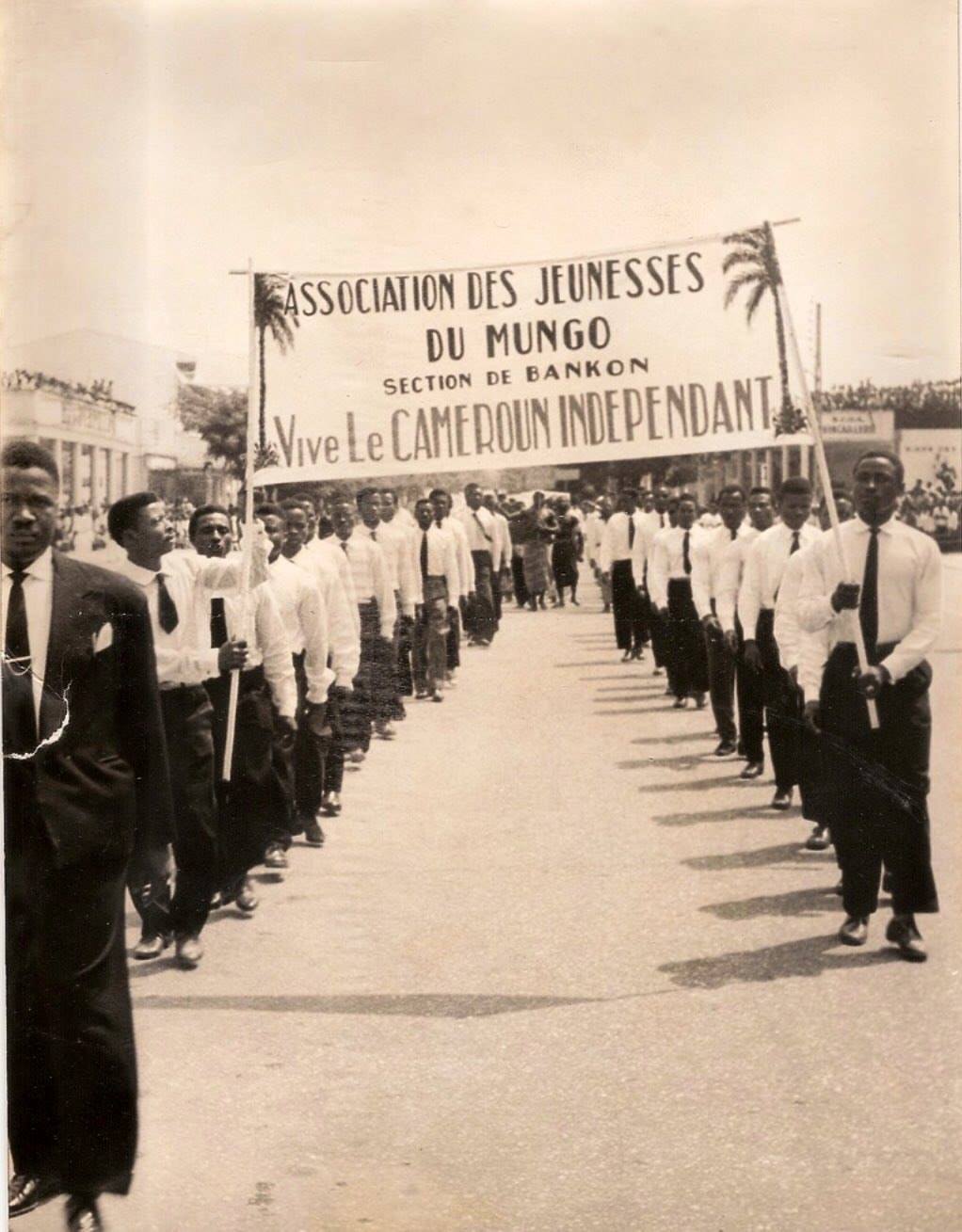
On January 1, French Cameroun officially achieved independence, becoming the République du Cameroun. On May 6, Ahmadou Ahidjo was elected President and held power for over 20 years. The UPC stated in its manifesto that Ahidjo is beholden to foreign interests and accused him of operating like an “apprentice dictator.”
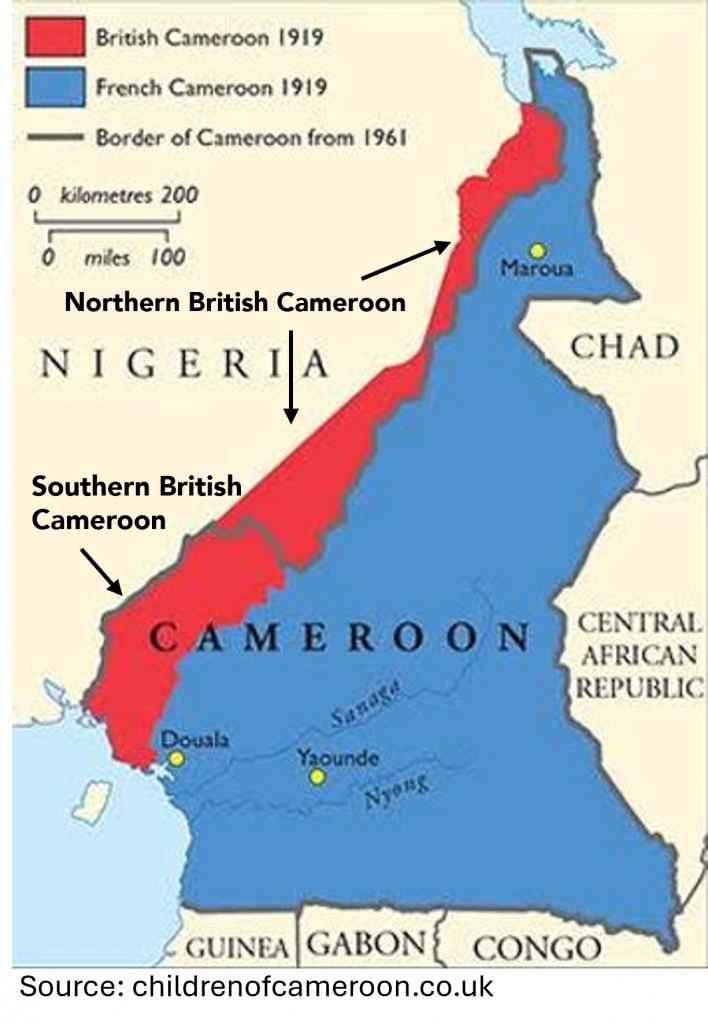
In February, Cameroonians in British-occupied territory voted on whether to join Nigeria or the Republic of Cameroon. Total independence was not presented as an option. The Northern Cameroons voted to join Nigeria, while the Southern Cameroons voted to join the Republic of Cameroon. Southern Cameroons and the République du Cameroun held constitutional talks in…Read More
On May 20, Cameroon held a public referendum and established a new constitution to formalize a return to unitary government. The 1972 Constitution redirected power to the President, and the country was renamed the United Republic of Cameroon. While over 95 percent of the electorate voted for the 1972 Constitution, Anglophone leaders point to…Read More
Ahidjo stepped down as President and handed power to Paul Biya peacefully. However, power struggles continued as Ahidjo remained head of the ruling political party until 1983.
In March, President Biya reinstated the name of the country prior to unification in 1961—the Republic of Cameroon. On April 6, supporters of former president Ahidjo attempted a coup against President Biya. The attempted coup deepened regional tensions between northern and southern Cameroon and resulted in 70 deaths, 1,053 arrests, and 46 executions.
Fongum Gorji Dinka, head of the Cameroon Bar Association, called for an independent Ambazonia state for previous British Southern Cameroon. On May 31, Dinka was arrested and detained by the Cameroonian Government. When he escaped, he claimed asylum at the British embassy. His asylum request was rejected, and he was re-detained and held at…Read More
Fongum Gorji Dinka, head of the Cameroon Bar Association, called for In February, “the Douala Ten” were arrested after they attempted to form an opposition party. Until this time, the Cameroonian Government was ruled by a single party, the Cameroon National Union. The Douala Ten were tried for charges of “subversion.” On May…Read More
Eight people were killed in government crack-downs on pro-democracy demonstrations. Nearly 300 students were arrested for demonstrating at the University of Yaoundé. On June 25, a coalition of opposition parties, the National Coordination Committee of Opposition Parties (NCCOP), organized a nationwide strike (“Operation Ghost Town”) to shut down transportation services, ports,…Read More
National elections, the first after multiparty politics were allowed, were held. President Biya declared victory in a contested election against John Fru Ndi, a prominent Anglophone politician. International observers declared that the election process was not free and fair.
A new constitution was promulgated. While the 1996 Constitution purported to create a “decentralized unitary state,” power was largely retained in the Presidency.
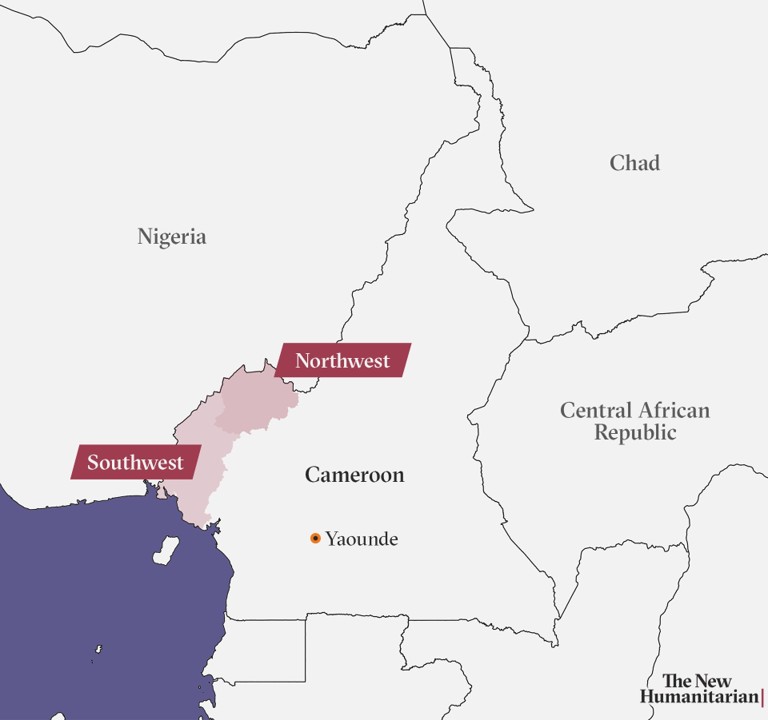
In October, lawyers, students, and teachers started peaceful demonstrations after French-speaking judges and teachers were sent to Anglophone-majority regions by the Francophone-majority Government. After colonial rule, Cameroon inherited two legal systems, and Anglophone-majority regions retained the common law system inherited by British imperialists. But the sudden imposition of Francophone judges threatened Anglophone representation…Read More
In January, negotiations between the Cameroon Anglophone Civil Society Consortium and the Government broke down after further reports of police abuses on demonstrators. The Consortium called for another widespread strike and revival of Operation Ghost Town in Anglophone-majority regions. The Government responded by shutting down the internet, banning the Consortium, and arresting…Read More
Separatist leader Sisiku Julius Ayuk Tabe was arrested in Nigeria and forcibly sent to Cameroon, despite requesting asylum. A Nigerian court later determined that the arrest and forced expulsion of Ayuk Tabe and 47 Anglophone separatists to Cameroon was illegal. In military trials, Ayuk Tabe and nine other supporters were sentenced to life in prison.
President Biya called for a “national dialogue,” which broke down due to inadequate assurances to protect the integrity of the process. Many of the separatist and Anglophone leaders were imprisoned and unable to participate. President Biya granted “special status” to Anglophone-majority regions North West and South West. The Cameroonian Government…Read More
In February, governmental security forces and allied ethnic Fulani militia killed 21 civilians in a massacre in Ngarbuh, a town in the Anglophone-majority North West region. While the Government initially denied allegations of civilian killings, it released an investigative report that was factually flawed but included a promise to work with human rights organizations. In March,…Read More
Human rights abuses linked to the Anglophone crisis persist. In late 2024, Anglophone-majority regions were still suffering from ad-hoc lockdowns, armed clashes, abductions, and reprisal attacks on civilians. Governmental security forces and separatist armed groups target civilians for killings and kidnappings for ransom. Journalists and human rights workers are at risk of arbitrary killings in Anglophone-majority regions.…Read More


